
When a Parent Refuses a Cane: 5 Ways to Help Them Say Yes
If your parent refuses a cane, you’re not alone — and you’re probably terrified. Maybe they’ve already tripped on a curb, stumbled on an uneven sidewalk, or even broken a bone. You can see the risk clearly. But when you bring up a cane or walker, they shut down. “I’m not that old.” “I don’t need that.” “It makes me look like an invalid.” The conversation ends before it starts, and you leave feeling helpless. When a parent refuses a cane, it’s rarely about stubbornness for its own sake — it’s about identity, fear, and what that cane means to them. Understanding that difference is where real progress begins.
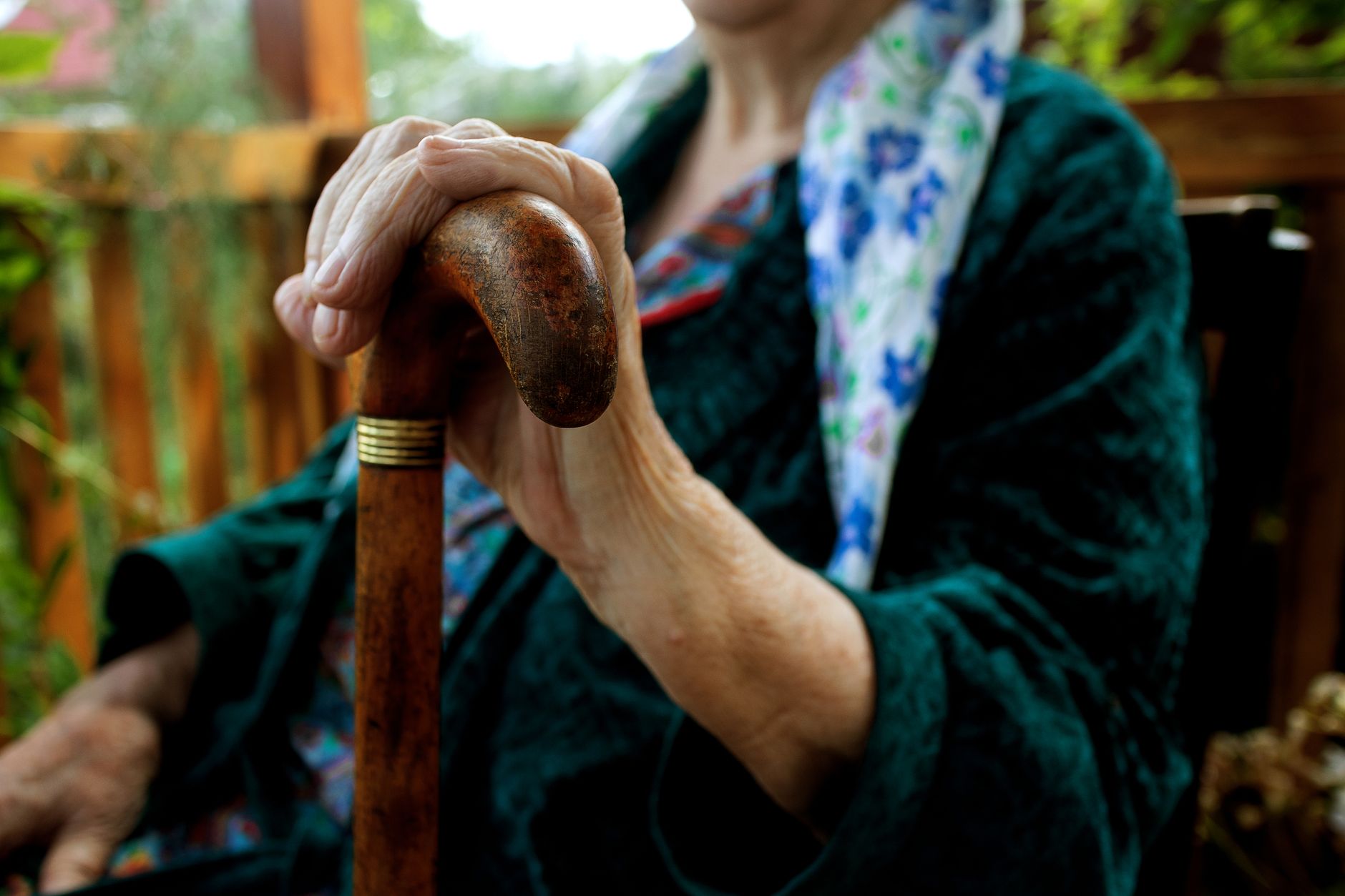
Why Your Parent Is Really Saying No
Before you figure out how to help, it’s worth slowing down and listening to what’s underneath the refusal. Most older adults aren’t being irrational — they’re grieving. A cane isn’t just a piece of equipment to them. It’s a symbol. It says: “I’ve changed. My body isn’t what it used to be. People will see me differently.”
For a generation that largely values self-reliance and independence, accepting a mobility aid can feel like waving a white flag. It signals to the world — and to themselves — that something has been lost. That’s a profound emotional experience, not a logic problem you can argue your way through.
Some common reasons parents push back:
- Identity and vanity. They don’t see themselves as “old people who use canes.” Their inner self-image hasn’t caught up to their physical reality.
- Fear of what comes next. Accepting a cane might feel like the first step toward a walker, then a wheelchair, then a nursing home. One “yes” feels like a slippery slope.
- Denial about the actual risk. They may genuinely not perceive how close to the edge they’re walking — sometimes literally. Conditions like macular degeneration can make it harder to judge curbs, steps, and surface changes, without the person fully realizing how much their perception has shifted.
- Pride in being “the capable one.” Many older adults spent decades being the person others leaned on. Needing help inverts a role they’ve held their whole adult life.
- Cost concerns. Some parents resist simply because they don’t want to spend the money, even when their adult children offer to pay.
According to the NIH National Institute on Aging, falls are the leading cause of injury — and injury-related death — among adults over 65. One in four older adults falls each year, and those who fall once are twice as likely to fall again. That context matters when you’re trying to figure out how urgent this really is.
The Hidden Fall Risk You Might Be Missing
Not all fall risks are obvious. We often think of weakness or balance problems as the main culprits, but vision changes — especially conditions like age-related macular degeneration (AMD) — create a specific and underappreciated danger.
AMD doesn’t cause complete blindness in most cases. Instead, it distorts central vision and makes it harder to detect contrast. That means a gray concrete curb on a gray concrete sidewalk can be nearly invisible on a bright day. A carpet edge blending into a hardwood floor becomes a trip hazard. A step down in dim lighting becomes a fall waiting to happen.
This is worth naming directly with your parent, because it reframes the conversation. It’s not about being “old.” It’s about a specific vision condition that creates specific hazards — and using a cane tip to probe the ground ahead is one of the most effective tools available for navigating exactly that kind of environment.
Watch for these signs that a parent’s fall risk is higher than they realize:
- Tripping on curbs, thresholds, or low obstacles repeatedly
- Reaching out to touch walls, railings, or furniture while walking
- Moving much more slowly in unfamiliar environments
- Squinting or pausing before stepping down from a curb or step
- A history of falls — even “minor” ones they didn’t mention
- Complaints about glare, difficulty with contrasts, or “things blending together”
- Any fall that resulted in a fracture, ER visit, or significant bruising
If several of these apply, the conversation about mobility support has moved from “nice to have” to genuinely urgent. You might also find our article When a Parent Refuses Help: 5 Real Steps useful for the broader pattern of refusal you may be navigating.
5 Ways to Help a Resistant Parent Say Yes
There’s no magic script. But these approaches have worked for real families — and they share a common thread: they meet your parent where they are emotionally, instead of trying to logic them into compliance.
1. Stop calling it a cane.
Language matters enormously. “Hiking pole,” “trekking stick,” “walking staff,” “balance support” — all of these carry completely different connotations than “cane.” One family found success by introducing a Nordic walking pole as a fitness accessory. Their parent now walks with it daily and looks like they’re heading out for exercise, not signaling decline. You’re not being deceptive — you’re removing a symbolic barrier to something genuinely useful.
2. Let them choose it themselves.
If you hand someone a standard aluminum hospital cane, you’ve already lost. Instead, take them to a store — or browse together online — and let them pick. There are walking sticks in hardwood, carbon fiber, custom-printed patterns, and even hiking-inspired designs with ergonomic grips. Some are genuinely beautiful objects. When your parent chooses one, they own the decision. That psychological shift is significant.
3. Reframe it around a specific fear they already have.
Rather than leading with “I’m worried about you,” try: “I know you hate the idea of ending up in a hospital. This is the thing most likely to keep you out of one.” Fall-related hospitalizations are expensive, disruptive, and often trigger exactly the loss of independence your parent is trying to protect. The National Council on Aging reports that fall-related medical costs for older adults top $50 billion annually in the U.S. — but more importantly, a serious fall often accelerates a downward spiral of health complications that a cane might have prevented entirely.
4. Ask the doctor to have the conversation.
Many parents will hear a physician say something they’d never accept from an adult child. If your parent has an upcoming appointment, call the office ahead of time and ask the doctor or nurse practitioner to bring up fall prevention and mobility aids directly. A 10-second clinical recommendation can carry more weight than months of family pleading.
5. Try a trial run — not a permanent commitment.
“Just try it for our trip to the farmers market on Saturday” is a much easier ask than “you need to use this from now on.” Lower the stakes. One afternoon. One outing. Once they experience moving through an uneven environment with more confidence, some parents change their minds on their own.
If your parent is open to something that doesn’t look clinical, the Brazos Walking Sticks line and similar hardwood trekking poles are worth exploring — they’re available on Amazon and major retailers for roughly $30–$70 and look far more like stylish outdoor gear than medical equipment. For parents who want something with a bit more grip support and a sturdy base, ergonomic quad-tip canes offer extra stability on uneven pavement and typically run $25–$60 at pharmacies and online.
What to Do When They Still Say No
Sometimes, despite your best efforts, your parent simply won’t budge. That’s painful — and it forces you into a difficult position. You can’t physically force an adult to use a cane. You can’t override their autonomy. But you’re not powerless either.
Here’s what you can do:
- Document the falls. Keep a simple log — date, location, what happened. If a fall results in a medical visit, request a copy of the record. This documentation matters if you ever need to have harder conversations about care levels or safety.
- Reduce environmental hazards at home. You can’t control the sidewalk, but you can remove throw rugs, improve lighting, add contrast tape to step edges, and install grab bars. These changes reduce risk even without a cane.
- Look into medical alert devices. If your parent falls and can’t get up — or falls outside — a wearable alert system can be the difference between a scary situation and a fatal one.
- Talk to an occupational therapist (OT). An OT can do a home safety assessment and often has more success than family members at convincing older adults to accept mobility aids. Medicare Part B may cover OT evaluations when medically necessary — check with your parent’s provider.
- Keep the door open. Don’t make the cane a battleground. Let it rest, revisit it later. Some parents eventually come around after a close call — or after seeing a peer they respect using one.
For families worried about what happens if a fall occurs when no one is around, a medical alert system is one of the most practical investments available. Services like Life Alert, Medical Guardian, or Bay Alarm Medical offer wearable buttons and fall-detection pendants with 24/7 monitoring. Monthly costs typically range from $20–$45 depending on features, with some plans including GPS tracking for parents who go out alone. It won’t prevent a fall — but it can dramatically reduce the time your parent spends on the ground waiting for help.
Taking Care of Yourself While You Navigate This
Here’s something that often goes unsaid: watching a parent refuse to protect themselves is genuinely exhausting and frightening. You’re not just managing logistics — you’re managing anticipatory grief, helplessness, and the specific frustration of loving someone who won’t let you help them.
That emotional weight is real. The fear every time your phone rings. The replaying of conversations where you could have said something differently. The guilt when you pull back and the anxiety when you push harder. If any of this sounds familiar, you’re not overreacting — you’re a caregiver doing a hard job.
Give yourself permission to set limits on how much energy you spend on conversations that go nowhere. You can express your concern clearly, once, without repeating it in a loop. You can make the environment as safe as possible without controlling what you can’t control. And you can reach out for support — whether that’s a caregiver support group, a therapist, or even connecting with resources through the Administration for Community Living, which funds local caregiver support programs in every state.
For more on navigating the emotional side of this, our article on Why Caregiver Guilt and Resentment Go Hand in Hand may give you something useful to hold onto.
Frequently Asked Questions
What if my parent only refuses the cane outside the house but uses furniture for support inside?
This is actually a common middle ground. Some parents will accept indoor grab bars, furniture arrangement for support, or even a small rollator for inside use before they’re willing to use a cane publicly. Start with whatever they’ll accept — partial acceptance of support is still meaningful risk reduction, and trust builds from there.
Can a doctor prescribe a cane, and will Medicare cover it?
Yes — a physician or nurse practitioner can write a prescription for a cane as a durable medical equipment (DME) item. Medicare Part B covers 80% of the cost for canes that meet medical necessity requirements, after the deductible. Your parent would need to get it through a Medicare-approved supplier. This approach sometimes helps with resistant parents because “the doctor ordered it” carries different weight than “I think you should use one.”
Are there canes specifically designed for people with low vision or macular degeneration?
Yes. White canes — traditionally associated with blindness — are also used by people with partial vision loss like AMD. They’re designed to detect curb edges, elevation changes, and surface transitions by feel. A low vision specialist or occupational therapist can recommend the right style and teach proper technique. Some parents are more willing to accept this framing because it’s about a specific vision condition, not general aging.
My parent had a bad fall and still won’t use a cane. What are my options?
This is one of the hardest situations families face. If your parent has had a serious fall and continues to refuse safety equipment, it may be worth having a direct conversation with their physician about cognitive evaluation (to rule out insight problems), an occupational therapy referral, and a documented safety plan. In extreme cases where an adult is making decisions that are clearly unsafe and cognitively impaired, families sometimes explore legal options — though that’s a significant step. You can read more in our article on What Guardianship for a Parent Actually Costs You to understand what that path actually involves.
How do I bring up this conversation without starting a fight?
Lead with curiosity, not conclusions. Instead of “You need a cane,” try “I’ve been worried since your last fall — can we talk about what happened?” Ask what concerns them about using one. Listen without immediately countering. The goal of the first conversation isn’t to win — it’s to understand their objection well enough to address it more effectively next time.
The Bottom Line
When a parent refuses a cane, you’re not dealing with a simple equipment problem — you’re navigating identity, fear, grief, and love all at once. The practical solutions matter: reframe the language, let them choose, bring in the doctor, try a trial run. But so does the emotional work of meeting your parent where they are, protecting the relationship, and accepting that you can influence but not control the choices they make about their own body.
Falls are preventable. Not always — but often enough that every conversation you keep having is worth it. Keep going. Keep the door open. And make sure you’re taking care of yourself in the process.
Related Articles
- When a Parent Refuses Help in Eugene, OR: 5 Real Steps
- Why Caregiver Guilt and Resentment Go Hand in Hand
- What Guardianship for a Parent Actually Costs You
By Roman Pacheco | Last Reviewed: June 11, 2026