
How to Find Shared Care Help for a Parent in Snoqualmie, WA
If you’re reading this, there’s a good chance you’re somewhere in the middle — not ready to walk away from a parent who needs help, but also not in a position to do everything yourself. That’s exactly where shared caregiver help comes in, and it’s one of the most under-talked-about options for families in Snoqualmie, WA trying to figure out what a realistic care plan actually looks like. You don’t have to choose between burning yourself out and doing nothing. There’s a wide, practical middle ground — and this article is going to walk you through it.
Why “Do It All or Walk Away” Is a False Choice
One of the most exhausting things about caring for an aging parent is the all-or-nothing pressure that creeps in. You either become the full-time caregiver — rearranging your job, your marriage, your sleep — or you feel like you’ve abandoned them. Neither of those is sustainable, and neither is actually required.
The truth is that most families cobble together care from several directions at once. A sibling handles medical appointments. A neighbor checks in on Tuesdays. A home care aide comes three mornings a week. Medicare covers some things. A local program covers a meal delivery. That patchwork isn’t a failure — it’s actually how most good care plans work.
But building that patchwork takes effort, especially when your parent hasn’t planned ahead, is resistant to help, or when siblings aren’t on the same page. If you’re the one who showed up, you already know: figuring out who else can help is often harder than doing the task yourself. That’s the part most people need help with.
Here are some signs that your current setup isn’t working and that a shared care model might be what your family actually needs:
- You’re the only one managing appointments, medications, and daily check-ins
- You’ve started canceling your own plans or skipping work to handle crises
- Your parent’s needs are escalating faster than your capacity to respond
- You’ve had the same “we need to talk about Mom” conversation with siblings three times and nothing has changed
- You feel resentful, exhausted, or like you’re invisible in your own life
- Your parent has had a recent fall, hospitalization, or new diagnosis that changed everything
If two or more of those sound familiar, this isn’t just burnout — it’s a signal that the current care structure needs to be rebuilt, not just patched.
What “Shared Care” Actually Means in Practice
Shared caregiver help doesn’t always mean splitting duties 50/50 with a sibling (though that’s one version). It means distributing the weight of care across people, programs, and services in a way that keeps your parent safe without destroying your life in the process.
Here’s how that can look in real families:
- Sibling task-splitting: One person manages finances and insurance; another handles in-person appointments; a third does grocery runs or meal prep
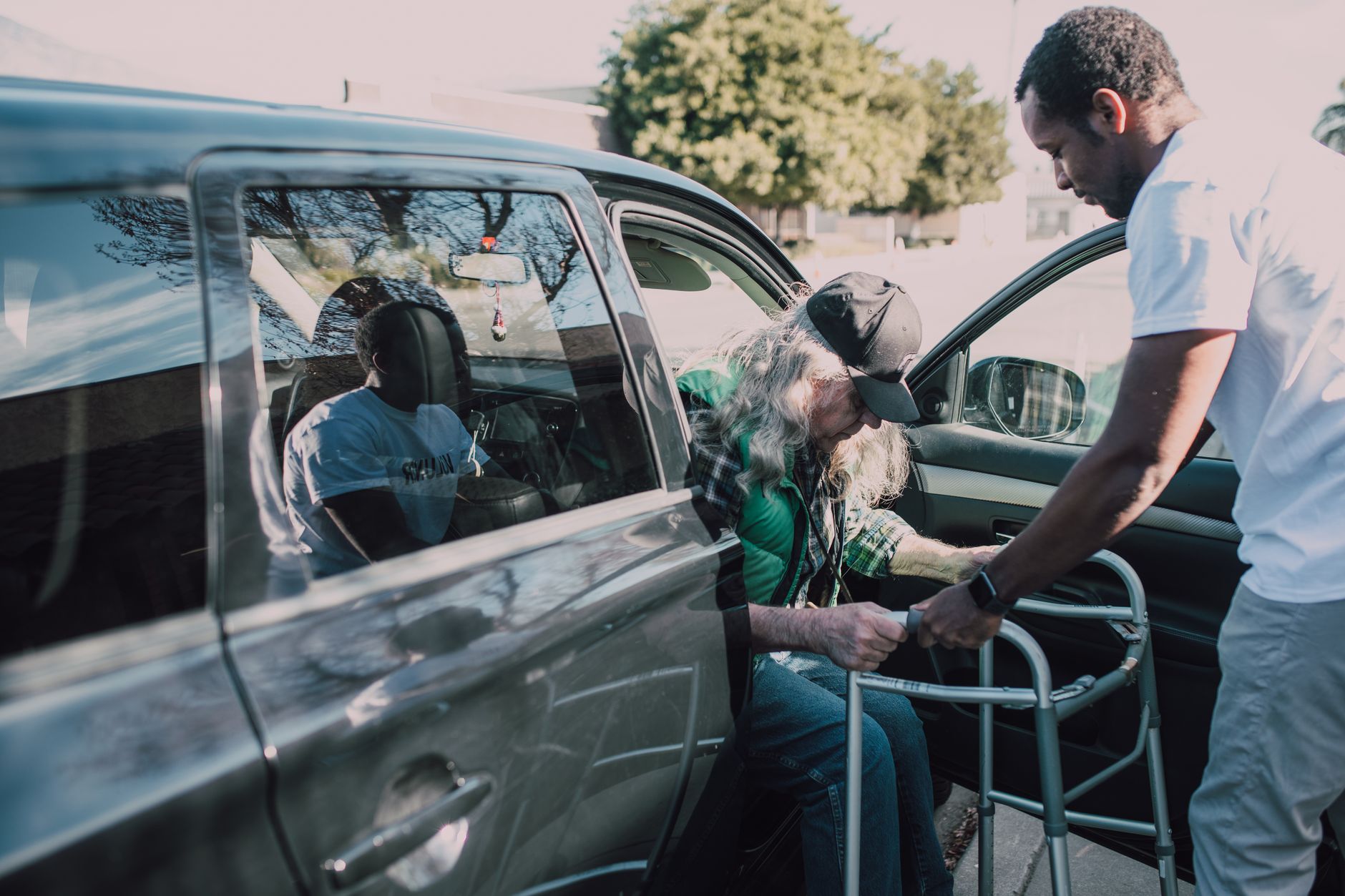
- Professional + family hybrid: A paid home care aide handles personal care (bathing, dressing, mobility), while you handle medical coordination and emotional support
- Community program support: Meal delivery, transportation to appointments, and adult day programs take significant daily pressure off family caregivers
- Care manager coordination: A geriatric care manager (sometimes called an aging life care professional) acts as a paid coordinator — assessing needs, building a plan, and making referrals — so you’re not doing all the research alone
The hardest part of building a shared care model is usually the conversation — with siblings who are geographically distant or emotionally checked out, or with a parent who insists they don’t need help. If that resistance is part of your story, you’re not alone. (It helps to know what specific options exist before you walk into those conversations.)
Local Resources in Snoqualmie, WA That Can Help Right Now
If you’re in or near Snoqualmie, you’re in King County — and King County has more caregiver support infrastructure than most families realize.
King County Aging & Disability Services (kingcounty.gov) is the Area Agency on Aging serving this region. They offer benefits counseling, in-home service coordination, and caregiver support programs. If you don’t know where to start, calling their office is genuinely one of the most useful first steps you can take. They can help assess what your parent qualifies for and connect you with local providers — at no cost to you.
Sound Generations (soundgenerations.org) is the largest nonprofit serving older adults in King County. They run meal programs, transportation services (including the Hyde Shuttle for seniors who can’t drive), senior centers, and caregiver support. For families in Snoqualmie where driving distances matter, their transportation programs can be a genuine lifeline — especially if your parent can no longer get to appointments on their own.
At the state level, Washington’s Aging and Long-Term Support Administration (ALTSA) through DSHS (dshs.wa.gov/altsa) oversees Medicaid-funded in-home care, adult family homes, and long-term support services. If your parent has limited income and assets, they may qualify for state-funded in-home care — which can significantly reduce what your family has to cover out of pocket.
And if your parent is a veteran, the VA Puget Sound Health Care System (va.gov/puget-sound-health-care) offers care coordination, home-based primary care, and caregiver support programs specifically for veterans and their families. This is a resource many families in western Washington don’t know to access until years into the caregiving journey.
How to Have the “We Need to Share This” Conversation With Siblings
Let’s be honest: the logistics of shared caregiver help are often easier to figure out than the family dynamics that get in the way. If you have siblings who are distant — geographically or emotionally — you’ve probably already felt the frustration of carrying more than your share.
Here’s a realistic framework for approaching that conversation:
- Lead with facts, not feelings (at first). “Mom has had two falls this month and can’t reliably manage her medications” is harder to dismiss than “I’m overwhelmed and you never help.” Start with what’s observable.
- Come with a specific ask. “Can you take over insurance calls and mail?” is more actionable than “I need more help.” Vague requests get vague responses.
- Put it in writing. A shared document — even a simple Google Doc — that lists who does what makes invisible labor visible and reduces the chance of things falling through.
- Consider a family meeting with a neutral third party. A social worker, geriatric care manager, or even a trusted family friend can facilitate a conversation that goes in circles when it’s just siblings.
- Be clear about what happens if nothing changes. Not as a threat, but as reality: “If we don’t figure this out, Mom will need to move to a facility sooner than any of us want.”
If your parent is resistant to accepting help — which is extremely common, especially for parents who value independence — that’s a separate but related challenge. Understanding what’s driving the refusal (fear of losing independence, distrust of strangers in the home, denial about their needs) can help you approach it differently. Our article on when a parent refuses help covers five concrete steps that work even when the conversation feels impossible.
What Shared Care Help Actually Costs — and What’s Covered
One of the biggest reasons families don’t build a shared care model sooner is that they assume professional help is unaffordable. It’s worth knowing what the real numbers look like — and where coverage exists.
| Type of Help | Typical Cost in WA | Potential Coverage |
|---|---|---|
| Home care aide (in-home, non-medical) | $28–$38/hour | Medicaid (if eligible), long-term care insurance |
| Adult day program | $75–$110/day | Medicaid waiver programs, some VA benefits |
| Geriatric care manager | $100–$200/hour | Typically private pay; some nonprofit sliding-scale options |
| Meal delivery (e.g., Meals on Wheels via Sound Generations) | Free to low-cost | Covered under Older Americans Act programs |
| Transportation to appointments | Free to sliding scale | Sound Generations Hyde Shuttle; Medicaid NEMT |
Medicare generally does not pay for ongoing personal care or home health aide visits unless they’re tied to a skilled nursing need after a hospitalization. That’s a gap that catches families off guard. Washington State’s Medicaid programs, administered through ALTSA, can fill some of that gap for qualifying families — but it takes time to apply, so starting the process before a crisis hits is strongly recommended.
The Administration for Community Living (ACL) at acl.gov maintains a searchable database of federally funded programs — including the National Family Caregiver Support Program — that offer free counseling, respite care, and support groups for caregivers. These exist specifically for people in your position and are widely underused.
For more on navigating what’s actually covered, the article on how to ask for respite help and actually get it is a useful companion read.
Frequently Asked Questions
What if I’m the only sibling willing to help?
You can still build a shared care model — it just means sharing the load with paid professionals and community programs rather than family members. Document everything you’re doing. If your parent has assets, those can often help fund professional care. If they don’t, Medicaid and community programs through King County Aging & Disability Services may be available. You don’t have to be the only person in your parent’s corner just because you’re the only family member showing up.
Can I get paid for caregiving I’m already doing?
In some cases, yes. Washington State has programs through ALTSA that allow family members — including adult children — to be paid as in-home caregivers for Medicaid-eligible parents. The rules vary based on your parent’s eligibility and your relationship. It’s worth asking King County Aging & Disability Services about what options exist in your specific situation.
What if my parent refuses all outside help?
This is genuinely one of the hardest situations caregivers face. Start by understanding the reason behind the refusal — fear, pride, cognitive decline, distrust — and work from there. In some cases, framing outside help as something that benefits you (“It would help me worry less if someone checked in on Tuesdays”) can reduce the resistance. If your parent lacks the cognitive capacity to make safe decisions, a conversation about guardianship or power of attorney may become necessary.
How do I know when we’ve moved past what shared care can handle?
Watch for escalating safety concerns: repeated falls, medication errors, confusion about time and place, inability to manage personal hygiene, or wandering. These are signs that in-home care — even robust shared care — may no longer be enough, and that a higher level of support like assisted living or memory care may need to enter the conversation.
Is there help specifically for caregivers — not just for the parent?
Yes. The National Family Caregiver Support Program (through ACL) funds local services specifically for caregivers, including counseling, support groups, and short-term respite. King County Aging & Disability Services and Sound Generations both have caregiver-specific resources. You matter in this equation too — and support exists for you, not just for your parent.
You Don’t Have to Figure This Out Alone
The question of how much to help an aging parent — and how — is one of the most emotionally loaded decisions adult children face. There’s no single right answer, and anyone who tells you otherwise hasn’t been in your shoes. What’s clear is that doing nothing and doing everything are both unsustainable paths. The families who navigate this best are usually the ones who build a realistic, shared structure early — before a crisis forces their hand.
If you’re in Snoqualmie, WA, you have real resources available to you right now. Start with a call to King County Aging & Disability Services. Ask what your parent qualifies for. Get the information before you decide what’s possible. That one step often changes everything.
Related Articles
- How to Ask for Respite Help (And Actually Get It)
- Why Caregiver Guilt and Resentment Go Hand in Hand
- What Guardianship for a Parent Actually Costs You
By Michael Horne | Last Reviewed: June 12, 2026